

Beneficiaries screened per team per day: Full colposcopy imaging, AI triage, and Swede Score report — delivered on-site, at camp speed.
Why Cervical Cancer Screening Matters?
Cervical cancer is one of the few cancers that can often be prevented through regular screening and timely treatment of precancerous changes. Since early stages usually have no symptoms, many women remain unaware until the disease has progressed. Regular screening helps detect abnormal cervical cells before they become cancerous, allowing for early intervention and significantly improving treatment outcomes.
What is cervical cancer screening?
Cervical cancer screening is a preventive test that detects abnormal cervical cells or high-risk HPV infections early, helping identify precancerous changes before they develop into cervical cancer.
Is cervical cancer screening painful, how long does it take, and is fasting required?
The screening is generally quick, safe, and causes minimal discomfort. It usually takes 10–15 minutes, and no fasting is required, making it a convenient preventive health check.
What is HPV?
Human Papillomavirus (HPV) is a common viral infection spread through skin-to-skin sexual contact. Certain high-risk HPV types can cause changes in cervical cells that may develop into cervical cancer if left undetected. Regular screening helps identify these changes early.
What is the difference between a Pap smear and an HPV test?
A Pap smear detects abnormal cervical cells, while an HPV test identifies high-risk Human Papillomavirus infections that can lead to cervical cancer. Both help detect disease early.
How often should women be screened, and can unmarried women be screened?
Women should follow their doctor’s advice regarding screening frequency. Yes, unmarried women can also undergo screening when appropriate, based on their age, medical history, symptoms, and individual risk factors.
What happens if my report is abnormal?
Your doctor will explain the findings and recommend appropriate follow-up tests, treatment, or specialist consultation for further evaluation.
Is the information confidential?
Yes. All personal information, test results, and medical records are kept strictly confidential and shared only with authorised individuals.
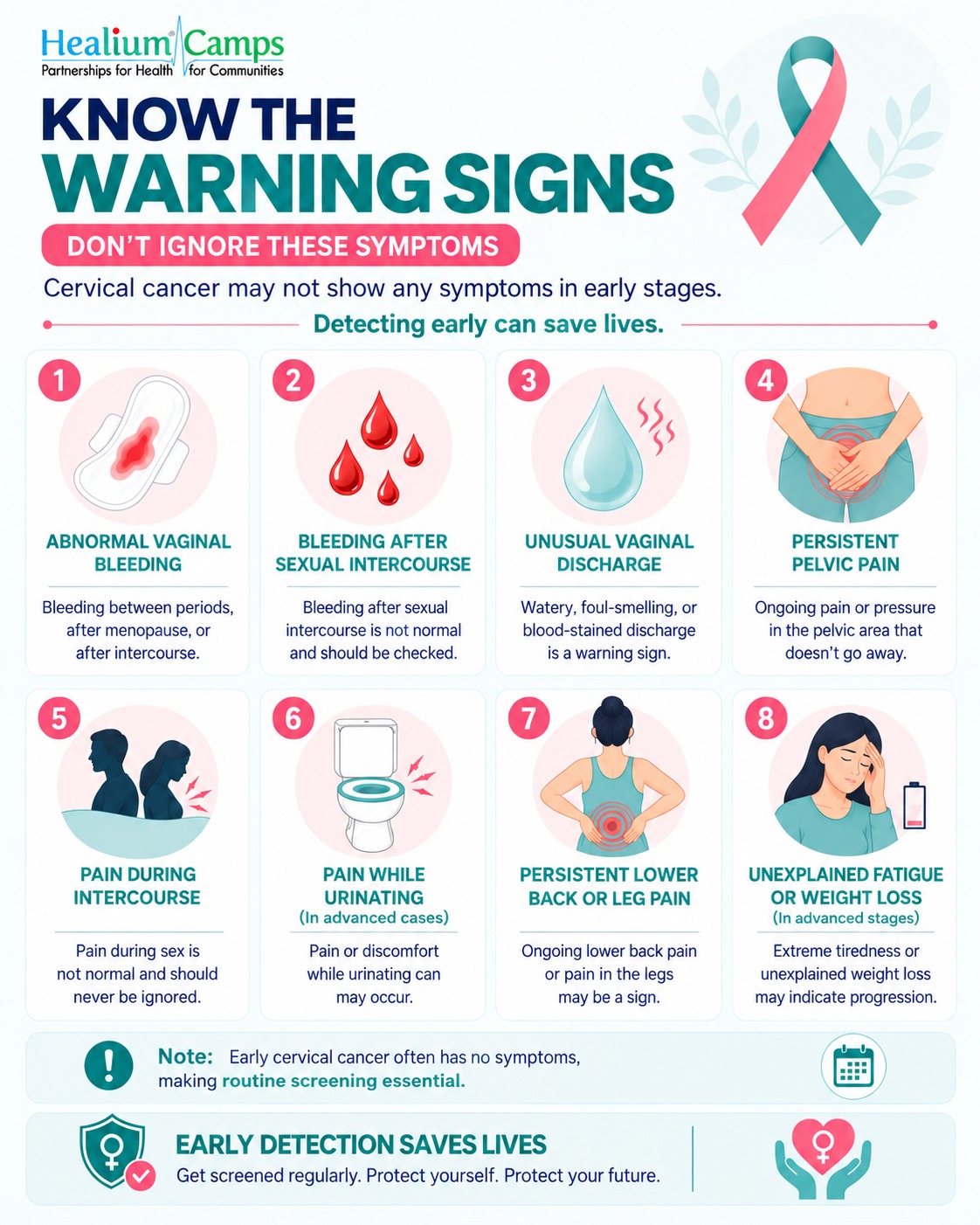
Know the Warning Signs of Cervical Cancer
Cervical cancer often shows no symptoms in its early stages. Recognising warning signs such as abnormal bleeding, unusual discharge, or persistent pelvic pain and seeking timely medical advice can lead to early detection and more effective treatment.
Send us your camp requirements & we will get in touch with you within 24 hrs.