Most preventive healthcare conversations in India are urban conversations. The clinics, the diagnostic chains, the corporate wellness programmes – they’re concentrated in cities. And yet, the populations with the least access to early detection are rarely the ones living near a hospital.
This is the gap that a well-designed health camp network is meant to close. Not as charity. As a deliberate, replicable system.
The Access Problem Isn’t Just About Distance
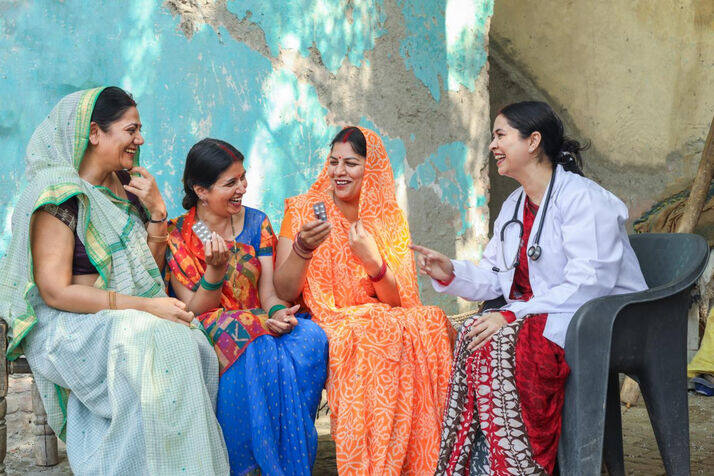
When people talk about healthcare access in non-urban India, the conversation usually stops at distance – the nearest clinic is too far. But that’s only one layer of the problem.
The deeper issues are time, trust, and cost. A daily-wage earner in a small town in Rajasthan or a farm worker in rural Chhattisgarh doesn’t lose only travel time visiting a facility. They lose a day’s income. They walk into an institution with unfamiliar processes and little explanation of what’s happening. And they often leave without a clear diagnosis or any treatment, because the test results take days to return.
A medical camp that goes to where people live, work, pray, or gather – and delivers instant results with on-site treatment – removes all three barriers at once. That’s the design logic Healium Camps has built its programmes around.
Screening Where Communities Actually Are
Healium Camps describes its operating philosophy directly: executing preventive health screening programmes where communities live, learn, earn, pray or play. This isn’t a tagline – it shapes where camps are actually placed.
A housing society in Nagpur. A fire station in Mumbai’s suburbs. A school campus in Karnataka. A Gram Panchayat in a district that has no diagnostic centre within 40 kilometres. A women’s association in Jaipur. The venue changes. The standard of care doesn’t.
This breadth is only possible because Healium Camps doesn’t operate from a central location that dispatches teams outward. It builds local professional networks in each state – doctors, lab technicians, ASHA workers, community mobilisers – who are onboarded through the Healium Camps app and connected to the same camp management system regardless of where they’re stationed.
Programmes That Travel Well Beyond Cities
Some screening programmes are particularly critical in populations that sit furthest from specialist care.
Oral Cancer is the most common cancer among men in India and the third most common among women, accounting for nearly 30% of all cancer cases in the country. Five-year survival jumps from 20% to 80% with early detection. Yet the communities most at risk – tobacco users in semi-urban and rural belts – are the least likely to walk into an oncology clinic. An oral cancer screening camp that brings AI-assisted, imaging-based, non-invasive screening directly to these communities isn’t supplementing the healthcare system. For many people, it is the healthcare system.
Anemia Screening tells a similar story. With prevalence at roughly 60% among women and children, the burden is heaviest in populations with poor nutritional access and limited awareness. Healium Camps’ Heroglobin programme delivers a result in 20 seconds and medicine in hand within 5 minutes – up to 2,000 beneficiaries per team per day. That kind of throughput is designed specifically for high-density community settings, not clinic waiting rooms.
Latent TB Screening matters critically in areas where delayed diagnosis leads to household transmission. Despite not showing symptoms, carriers can be infectious. Community-level screening at health camps interrupts that chain far earlier than facility-based testing typically does.
The Network Effect of Consistent Presence
One camp is an intervention. A network of camps, returning to the same communities over time, becomes something more – it builds health awareness as a cultural norm, not a one-off event.
Healium Camps currently operates across a wide band of Indian states, with projects delivered or ongoing across Maharashtra, Gujarat, Rajasthan, Chhattisgarh, Karnataka, Tamil Nadu, Kerala, Assam, and more. The map on their website marks green (delivered/ongoing) and blue (coming soon) – and the blue is growing.
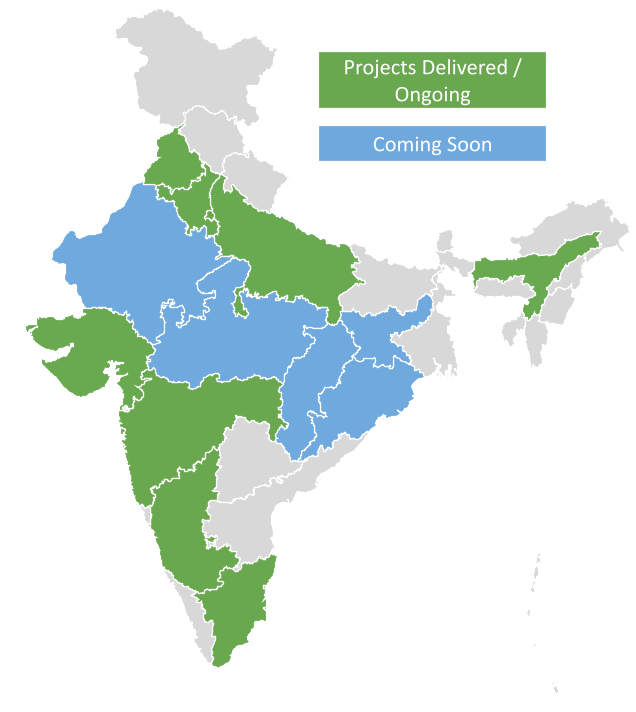
Each state presence isn’t just a pin dropped on a map. It’s a local team, a set of established community relationships, and a documentation trail that sponsors and organisers can verify through a centralised dashboard in real time.
Preventive healthcare that only reaches people who already have access isn’t prevention at scale. It’s addition to a system that already works.
The real infrastructure challenge – and the real opportunity – is building health screening camp networks that function just as reliably in a Vidarbha district or a Northeastern town as they do in a metro. That’s what a serious multi-state presence is actually for.
FAQs
1. Why are medical camps important beyond urban cities?
Medical camps help improve preventive healthcare access in semi-urban and rural regions where regular diagnostic facilities may not always be easily available. They support early detection, health awareness, and screening for lifestyle and non-communicable diseases closer to communities.
2. What services are commonly offered in preventive medical camps?
Preventive medical camps may include screenings for diabetes, heart health, anemia, oral cancer, vision health, and other lifestyle-related conditions. Many programmes now use portable diagnostic technologies that enable faster and more efficient on-site screenings.
3. How do medical camps improve preventive healthcare access?
Medical camps bring healthcare services directly to communities, reducing travel challenges and improving participation in preventive screenings. They also help create awareness about early symptoms, lifestyle risks, and the importance of regular health check-ups.
4. Who can organise large-scale medical camps?
Hospitals, corporates, NGOs, educational institutions, CSR teams, and community organisations can organise medical camps. Structured healthcare partners help manage logistics, screening technologies, healthcare teams, and participant coordination.
5. How are large-scale medical camps managed across multiple locations?
Large-scale medical camps are supported through regional healthcare teams, portable screening infrastructure, and standardised operational processes. This helps ensure smooth execution, consistent reporting, and scalable preventive healthcare delivery across different locations.
Need help organizing a medical health camp? Reach out to Healium Camps – Talk to us.