

Cervical Cancer Screening & Instant Triage Report

Cervical Cancer Screening & Instant Triage Report

Cervical cancer is the 2nd most common cancer in women worldwide — and entirely preventable with early detection. India bears over 25% of the global burden, yet fewer than 20% of women are ever screened.

Prevalence

  • 340,000 – Deaths due to cervical cancer in 2023 — one every 9 minutes
  • ~25% of global cervical cancer burden borne by India
  • 70%+ Cases in India are diagnosed at advanced, harder-to-treat stages
  • 90% of cervical cancer deaths are linked to poor access to screening and prevention

Cost

Cervical cancer treatment is significantly more expensive than prevention. Early detection through colposcopy-based screening costs a fraction of late-stage treatment. The productivity loss from cervical cancer mortality is estimated at USD 5.6 Billion annually in India alone — a cost borne entirely by families and the healthcare system.

Solution

When detected early, the 5-year survival rate of cervical cancer patients rises from 20% to over 80%. Colposcopy-based AI screening — without requiring a darkroom, specialist on-site, or expensive lab setup — brings accurate, instant triage directly to the camp setting.

Why us

Powered by SinDiColpo® — by CareNX Innovations (IIT Bombay incubated)
  • Patent-granted, CDSCO-licensed AI-based digital colposcope — no conventional colposcope required
  • No-touch, no-darkroom, non-invasive examination — ideal for community camp settings
  • Clinically validated with 100% sensitivity, published in peer-reviewed journal
  • Instant triage report within 30 seconds using Swede Score-based AI analysis
  • Screening time reduced from 20 minutes to just 5 minutes per patient
  • Remote specialist review — no on-site gynaecologist needed for triage
  • Full colposcopy image capture: Pre Saline, Aceto White, Lugol’s Iodine, Green Filter views

Who should get Screened

  • All women aged 25–65 years
  • Women with HPV-positive DNA test results
  • Women with abnormal Pap smear (LSIL, HSIL)
  • Women with persistent vaginal discharge or cervicitis
  • Women with family history of cervical cancer
  • Women who have never been screened for cervical cancer
  • Women with HPV infection history or weakened immunity

Report Types & Turnaround Time

  • 30 sec : AI-generated Swede Score instant triage result
  • 5 min : End-to-end colposcopy examination per patient
  • 24 hr: Specialist-reviewed advanced colposcopy report

Technology Certifications

Screening Camp

Beneficiaries screened per team per day: Full colposcopy imaging, AI triage, and Swede Score report — delivered on-site, at camp speed.
Venue Requirements

  • Private examination room or screened enclosure
  • Examination table — 1 per screening station
  • Tables & chairs as per team size
  • Standard plug points & extension cords
  • Good Wi-Fi or strong mobile network for remote specialist
  • Washroom nearby for participants & team
  • Queue management volunteers

Inclusions

Trained screening team with SinDiColpo® device, Travel & transport of team and equipment (MMR), Full colposcopy imaging across all filter views, AI-powered Swede Score analysis & instant triage, Remote specialist consultation for flagged cases, Patient report — instant triage + 24hr advanced report, Referral guidance for biopsy or follow-up care if indicated

Faq

Why Cervical Cancer Screening Matters?

Cervical cancer is one of the few cancers that can often be prevented through regular screening and timely treatment of precancerous changes. Since early stages usually have no symptoms, many women remain unaware until the disease has progressed. Regular screening helps detect abnormal cervical cells before they become cancerous, allowing for early intervention and significantly improving treatment outcomes.

What is cervical cancer screening?

Cervical cancer screening is a preventive test that detects abnormal cervical cells or high-risk HPV infections early, helping identify precancerous changes before they develop into cervical cancer.

Is cervical cancer screening painful, how long does it take, and is fasting required?

The screening is generally quick, safe, and causes minimal discomfort. It usually takes 10–15 minutes, and no fasting is required, making it a convenient preventive health check.

What is HPV?

Human Papillomavirus (HPV) is a common viral infection spread through skin-to-skin sexual contact. Certain high-risk HPV types can cause changes in cervical cells that may develop into cervical cancer if left undetected. Regular screening helps identify these changes early.

What is the difference between a Pap smear and an HPV test?

A Pap smear detects abnormal cervical cells, while an HPV test identifies high-risk Human Papillomavirus infections that can lead to cervical cancer. Both help detect disease early.

How often should women be screened, and can unmarried women be screened?

Women should follow their doctor’s advice regarding screening frequency. Yes, unmarried women can also undergo screening when appropriate, based on their age, medical history, symptoms, and individual risk factors.

What happens if my report is abnormal?

Your doctor will explain the findings and recommend appropriate follow-up tests, treatment, or specialist consultation for further evaluation.

Is the information confidential?

Yes. All personal information, test results, and medical records are kept strictly confidential and shared only with authorised individuals.

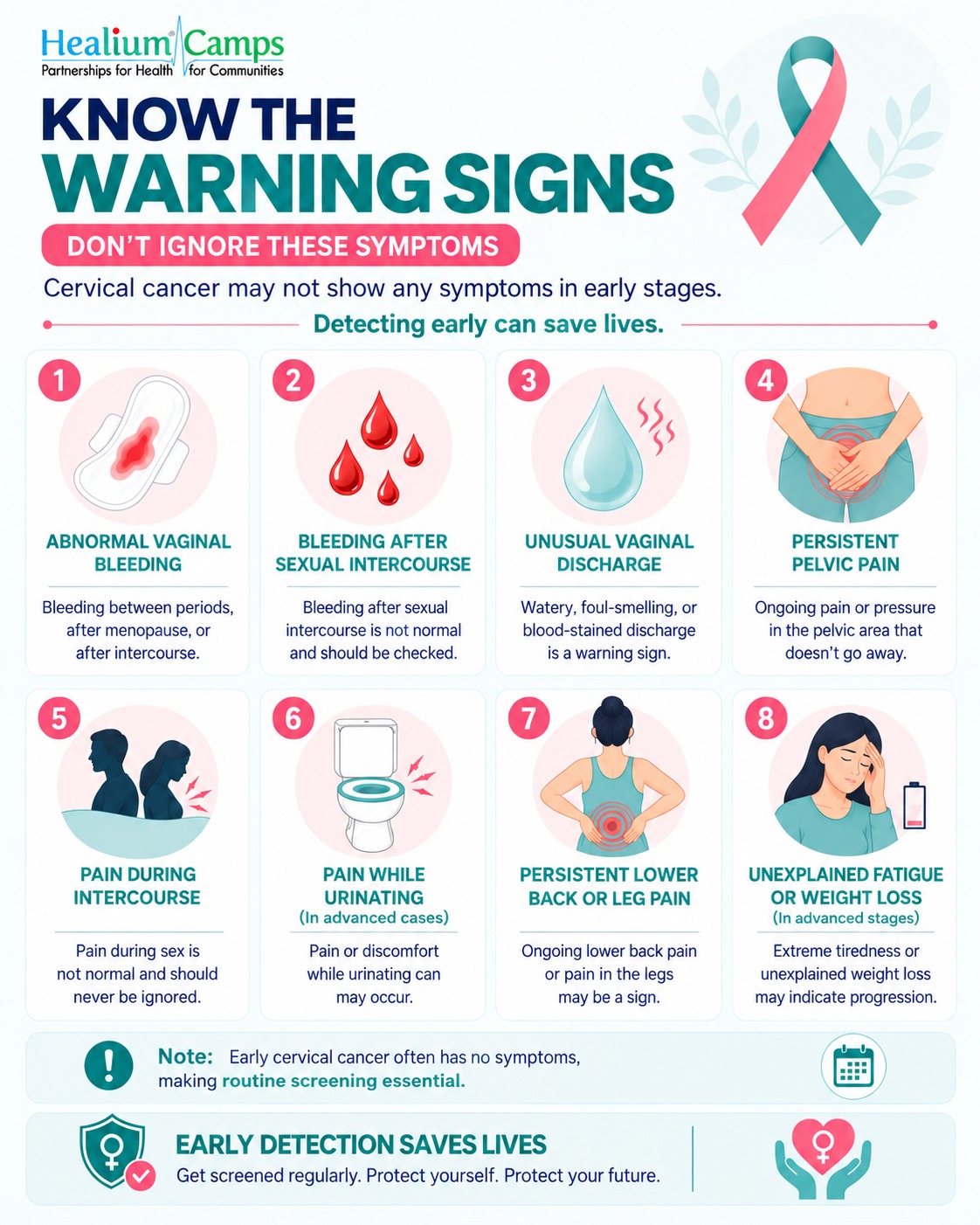
Know the Warning Signs of Cervical Cancer

Cervical cancer often shows no symptoms in its early stages. Recognising warning signs such as abnormal bleeding, unusual discharge, or persistent pelvic pain and seeking timely medical advice can lead to early detection and more effective treatment.

Get in Touch with Us

Send us your camp requirements & we will get in touch with you within 24 hrs.

Partner with Us

Slot Gacor Slot Gacor kulo4d slot online gacor